

Recent developments emerging from the battlefield, the defence industry, and international military institutions all point to a single overarching conclusion: Ukraine has already become de facto integrated into the West's collective security architecture, despite remaining outside the formal framework of the North Atlantic Alliance.
This raises a question that, until recently, would have seemed almost heretical: Does Ukraine still need full NATO membership if the level of military cooperation is already unprecedented?
To better understand the situation, let us consider a number of facts. For the first time in the history of the modern Ukrainian Navy, one of its units has been officially integrated into NATO's mine countermeasures command and control system. Specifically, this concerns the Mine Countermeasures Staff of the 1st Division, which successfully passed the Alliance's re-evaluation level 2 (NEL-2) during the Sea Breeze 2026 exercises. The resulting assessment, "fully mission capable," signifies far more than mere formal recognition.
It confirms the Ukrainian unit's ability to command multinational forces and operate in accordance with Allied Command Operations standards. In other words, Ukraine is already capable of carrying out tasks that have traditionally been regarded as the prerogative of NATO member states. Moreover, this is not simply a matter of adaptation, but of full interoperability and command capability.
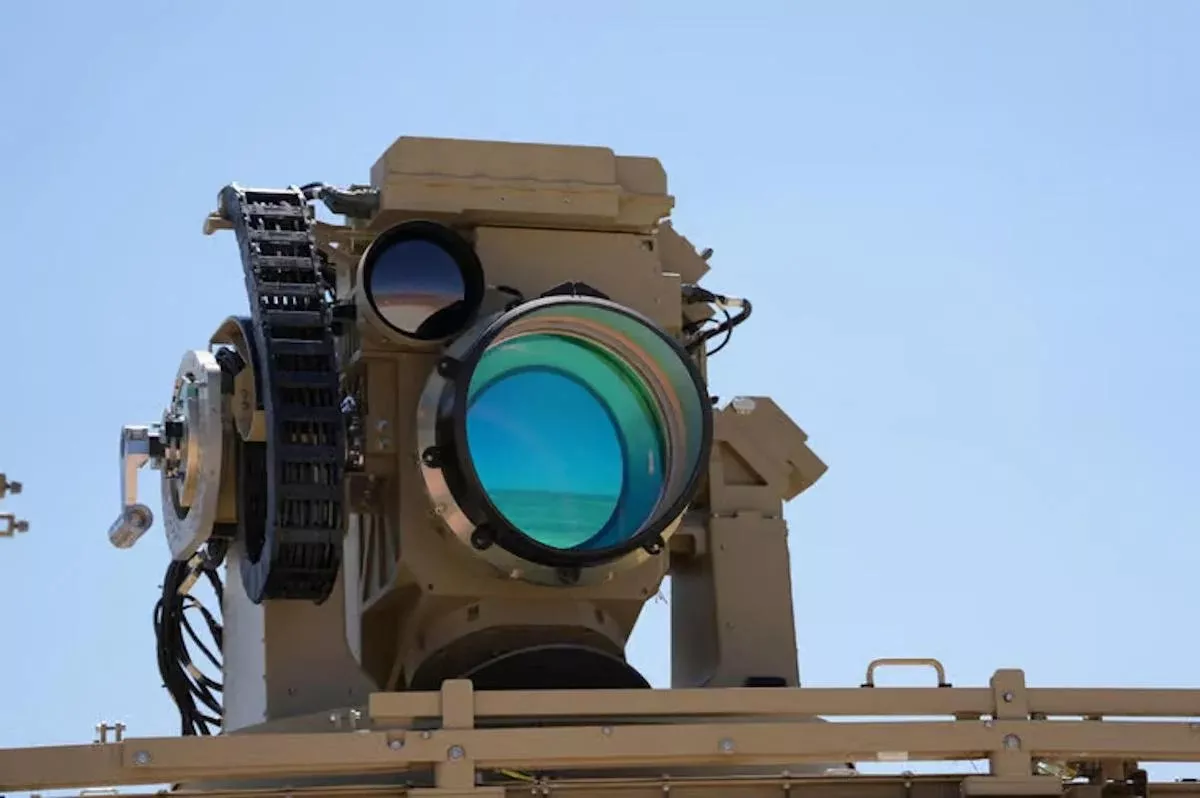
At the same time, a technological breakthrough is taking place. Statements by Ukraine's military leadership about the imminent deployment of laser weapons to counter unmanned aerial vehicles could until recently have been perceived as an element of futuristic rhetoric. Today, however, this is already a practical reality. According to Deputy Commander-in-Chief of the Armed Forces of Ukraine Andrii Lebedenko, systems capable of shooting down FPV drones and countering Shahed drones already exist and are undergoing testing. This marks a fundamentally new stage in the development of air defence: Ukraine is not merely adopting technologies—it is becoming a platform for their combat testing and refinement. In the conditions of modern warfare, such experience is of the greatest value.
The industrial aspect is no less significant. In particular, the United Kingdom has resumed the production of artillery barrels for the first time in almost 20 years, under a contract with Sheffield Forgemasters for 150 barrels of 105 mm and 155 mm calibres. The first four test samples have already arrived in the country for integration and preparation for serial production at Ukrainian enterprises. This demonstrates both the transfer of technology and the creation of a joint production base. Thus, Ukraine is gradually transforming from a recipient of assistance into an equal participant in defence-industrial cooperation.
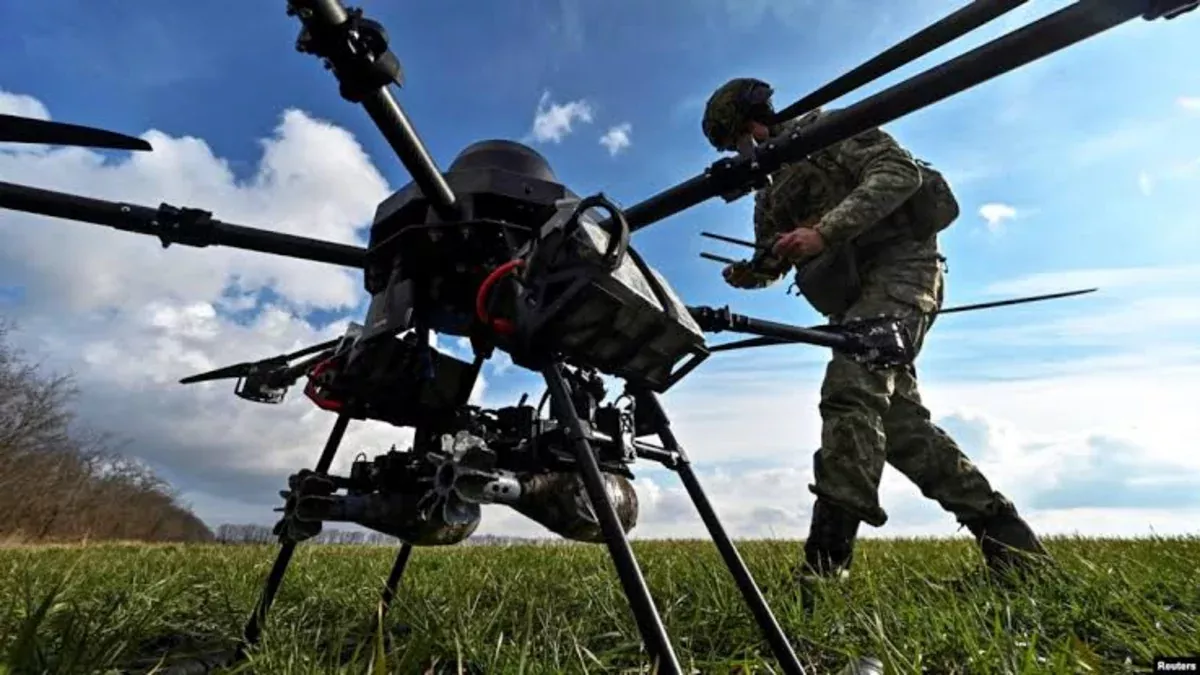
Another important signal has come from the United States: Chairman of the Joint Chiefs of Staff General Dan Caine has explicitly stated the need to adopt Ukraine's experience in the use of unmanned aerial systems. This amounts to an acknowledgement that the Armed Forces of Ukraine are no longer only learning—they are also teaching. Furthermore, the U.S. military has already begun employing a tactic first used by Ukraine: the large-scale deployment of low-cost kamikaze drones. This can be regarded as a pivotal development, providing grounds to assert that Ukraine is no longer merely a party to the war, but a laboratory of modern military thought, shaping trends that are subsequently adopted by the world's leading armed forces.
Thus, the realities demonstrate that, over the years of confronting a nuclear power such as Russia, the Ukrainian army has acquired unique combat experience. Today, the Armed Forces of Ukraine are a military that has gone through intensive combat operations and has managed not only to endure, but also to adapt, modernise, and evolve. They can rightfully be described as the army of the future, already operating under conditions for which others are only beginning to prepare. Against this backdrop, even the principal argument in favour of Ukraine's accession to the North Atlantic Alliance—Article 5, which guarantees collective defence—no longer appears as compelling, particularly given that, even without formal membership, Kyiv is already receiving extensive military, financial, and technological support.
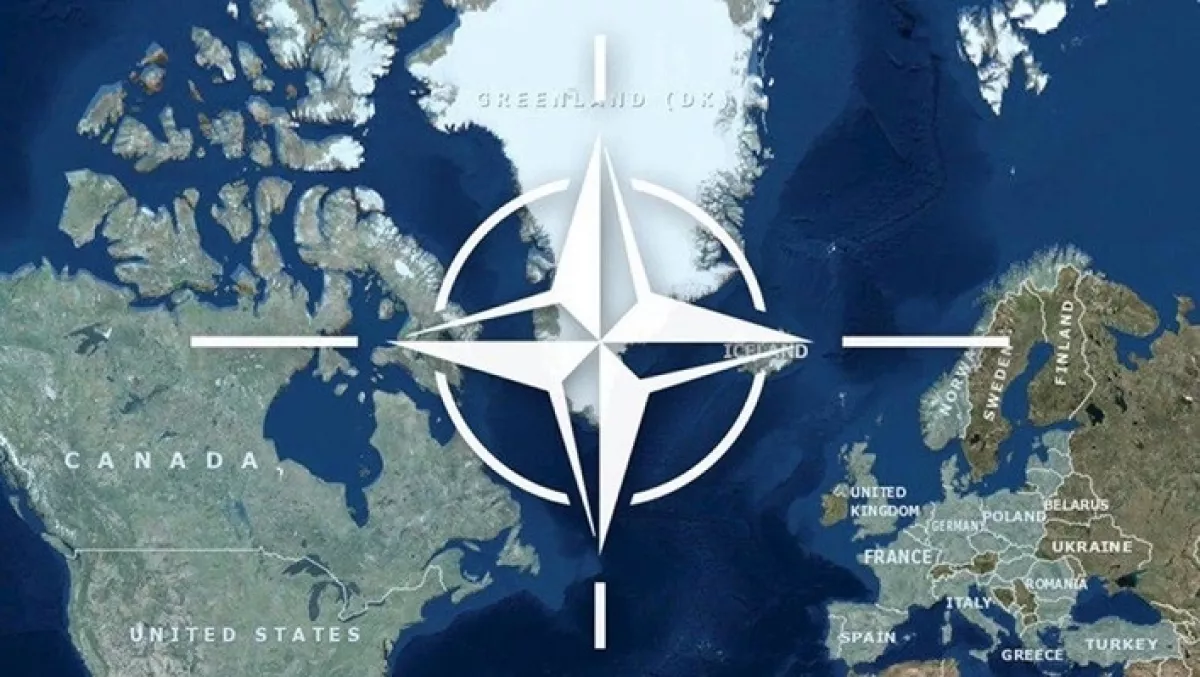
It cannot be ruled out that, under the current circumstances, in the coming years we will witness a transformation of the Alliance itself—from a configuration in which NATO provides security for its member states to a model in which countries such as Ukraine become key pillars of that security. In that case, the question of Ukraine's membership will shift to a different level: from "Does NATO need Ukraine?" to "How prepared is the Alliance for Ukraine?" After all, a country that, in the midst of a full-scale war, has become a driving force behind military innovation has already changed the rules of the game. And this fact cannot be ignored.
Source: caliber.az





 scorpion.az